
Why the words you choose matter more than the news itself
A mother sits in the hospital hallway rehearsing how she'll explain the diagnosis to her 7-year-old, and before she says a word, the child asks, "Am I going to die?" This moment is not unique. We've stood with hundreds of families in the seconds before they speak the hardest words they'll ever say to their kids.
Here's what we've learned: children as young as 3 read your stress through your tone and body language before they understand any of the words. Staying silent doesn't buy your child peace. It buys a scared child guessing at worse answers in the dark. The decision rule we give families is direct: have the first conversation before the next hospital visit or procedure, not after it happens to the child unexpectedly. Silence is not protection. Honesty is.
This is not one conversation. It's a series of shorter ones that get updated as the illness, tests, or treatment change. A diagnosis does not stay still, and neither should the talk about it. The frame we hold is simple: honesty plus presence, not honesty plus fear. That difference is everything. It keeps a child from carrying the diagnosis alone.
Research from the National Institutes of Health shows that earlier, developmentally honest disclosure to children about a serious illness is associated with lower reported child anxiety than delayed or withheld disclosure. The science backs what families tell us: a child who knows what's happening, and who knows their parent is with them, carries less fear than one left to imagine.
What age-appropriate actually means, broken down by developmental stage

Age-appropriate doesn't mean less honest. It means matched to how your child's brain actually works at this moment. The vocabulary and detail shift, but the truth stays the same.
Ages 2 to 6: Use concrete, present-tense words tied to your child's body. "Your blood has a sickness the doctors are helping fix" lands. "Sepsis" does not. Retire euphemisms like "went to sleep" that a literal-minded child misreads as connected to death. A 4-year-old will believe it.
Ages 6 to 11: This age understands cause and effect. They do better with a walkthrough of what a procedure will look, sound, and feel like before it happens, in that order. "You'll go into a big machine that's cold and loud, you'll hear beeping, and you won't feel anything" is more useful than "you're getting an MRI."
Ages 12 and up: Teens want to be included in medical decisions and told the honest uncertainty rather than a managed version. They often withdraw once they sense they are being handled. Give them the unvarnished facts, ask them what they want to know, and respect if they need time before talking.
The decision rule is simple: match vocabulary to what your child already knows from school. A 9-year-old who understands germs can handle "infection." Start there.
- Toddlers and preschoolers (2-6): Use "your body," "sick," "doctors are helping," point to the spot, use simple present tense, and avoid animal metaphors or sleep language.
- School-age (6-11): Explain what will happen step-by-step (see-hear-feel), connect to things they know, answer the questions they ask before offering extra detail, and let them know when something might hurt.
- Tweens and teens (12+): Include them in decisions, use medical terms if they ask, admit what you don't know, give them time to process, and don't assume silence means they're okay.
How do you answer when your child asks if they are going to die?
This is the question that stops a parent's breath. And it needs an answer that honors the fear behind it.
Answer the fear before the medical facts. "Are you scared right now?" opens the real conversation faster than a straight clinical answer does. Your child is looking for safety and assurance of your presence. That's the first need to meet.
Never promise an outcome you cannot guarantee. A false reassurance that gets contradicted later, by a setback, a procedure, a conversation with a nurse, breaks a child's trust in every conversation that follows. Instead, anchor the answer to what you can promise: your presence and the doctors' commitment to care.
"When children ask whether they are going to die, they are most often seeking reassurance of safety and presence rather than a clinical prognosis."
For a younger child, the answer might sound like this: "The doctors are doing everything they can, and I am not leaving your side. That won't change." For an older child, you might say: "I don't know what will happen next, but I know the doctors are treating this seriously, and we'll face it together."
If the prognosis is genuinely poor, bring in a palliative care team before this conversation happens. When we talk about palliative care focused on comfort and quality of life, the answer to "am I going to die?" can include what comfort and care will look like, not just silence or false hope.
How much medical detail should you actually share?
The instinct is to explain everything. Resist it. Answer only the question asked, then stop and wait. Most children signal they want more by asking a follow-up rather than needing it all at once. A 6-year-old asking "will it hurt?" doesn't need an immunology lecture. She needs to know: yes, it might hurt a little, but not for long.
Concrete cause-and-effect explanations outperform mechanism-heavy ones under age 7. "This medicine helps your blood fight the sickness" lands better than a description of how chemotherapy works at the cellular level. Save the detail for the questions that ask for it.
For an upcoming procedure, use the method that Johns Hopkins child life specialists employ: walk through what the child will see, hear, and feel, in that order, the same sequence used before a scan or IV placement. This is not just kindness. It reduces fear and improves how your child handles the moment.
And retire "put to sleep" as a phrase. Families consistently report it backfires. Children connect it to a pet's death or their own fear of not waking up. Use the real word: "anesthesia will help you sleep during the surgery, and the doctors will keep you safe the whole time."
How do you talk to siblings without making them feel invisible?

Siblings often stay quiet because they feel their questions take attention away from the sick child. So give them a dedicated one-on-one window to ask, not just a spot in the hospital hallway between updates about tests.
Use the same age-based honesty rules, but center the explanation on what changes in their own day. Who picks them up from school now? Why is a parent gone overnight? When will things feel normal again? These are the questions siblings carry. Clinical detail isn't what they need.
Watch for guilt language in siblings age 7 and up. "I wish it was me instead" is common and needs a direct, repeated answer: this illness is nobody's fault. Not the sick child's choices, not yours, not theirs. When a sibling says it once, answer it. When they say it again, answer it the same way. They need to hear it more than once.
Our guide on age-specific ways to explain a sibling's medical condition walks through these conversations by age band, with language that keeps siblings connected rather than sidelined.
Phrases that open the door, and phrases that quietly close it
Language matters. Not because there's a perfect script, but because some words open listening and others shut it down fast.
- Open with: "What have you already heard about what's happening?" It surfaces rumors or fears picked up from classmates and cousins you would otherwise never correct.
- Retire: "You're so brave." Said too often, it teaches a child that showing fear disappoints you. Courage and fear are not opposites.
- Say out loud: "It's okay to be scared and to ask me anything, even the same question twice." Permission has to be stated. Children rarely assume it.
- Avoid: "It's just a small procedure." Small or not, it doesn't feel small to the child living through it. Name what it is.
- Use instead of silence: "I don't know what happens next, but we'll find out together." Uncertainty is honest. Pretending you know is not.
- Retire: "Don't worry." A child's worry doesn't vanish because you said so. Acknowledge it instead: "I know you're worried. I'm here."
When should you bring in a child life specialist or counselor?
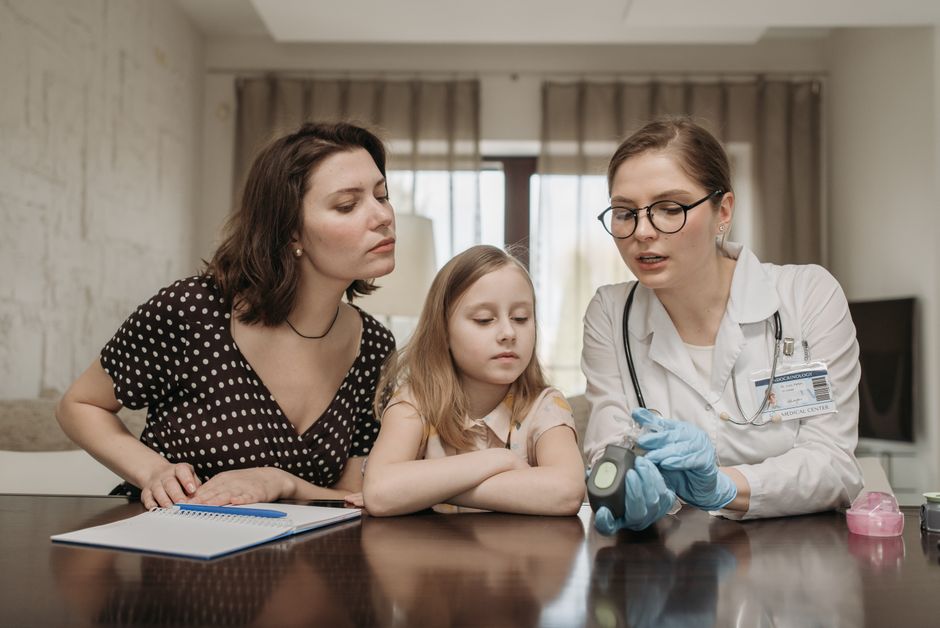
Watch for signs that your child is carrying more than they can hold alone. Regression, bedwetting, thumb-sucking in a child who had outgrown it, is a flag. Persistent nightmares. Flat refusal to discuss the illness at all. New aggression at school or home. These are not failures in your conversation. They're signals that your child needs more support than a family can provide alone.
"Regression, sleep disruption, and behavioral changes are recognized signs that a child is struggling to cope with a medical diagnosis and may need additional support beyond the family conversation."
Child life specialists are trained specifically in developmental communication about illness and procedures. Most children's hospitals have them on staff at no added cost to the family. They become a bridge between the clinical world and your child's emotional world. Our role is connecting families to those specialists and to peer parents who have already had this exact conversation with their own child. We run support groups for parents of medically complex children where this conversation becomes part of a larger hold. You're not figuring it out alone.
You will not find the perfect words, and that is all right
There is no script that removes the fear from this conversation, only ones that keep a child from carrying it alone. You will stumble. You will say something you wish you'd said differently. Your voice will shake. That's not failure. That's honesty. That's presence. That's everything your child needs.
We walk with families through this exact moment and the ones that follow it, from the first diagnosis conversation through the transition home and into the years that follow. No child should fight alone. No parent should carry these conversations by themselves. Reach out to Vivian's Victory, and let us stand with you in this. That's where we are at our best, standing with families when the words feel impossible, when the fear feels too big, when you need someone who's walked this road before to say: you're doing this right. Keep going.